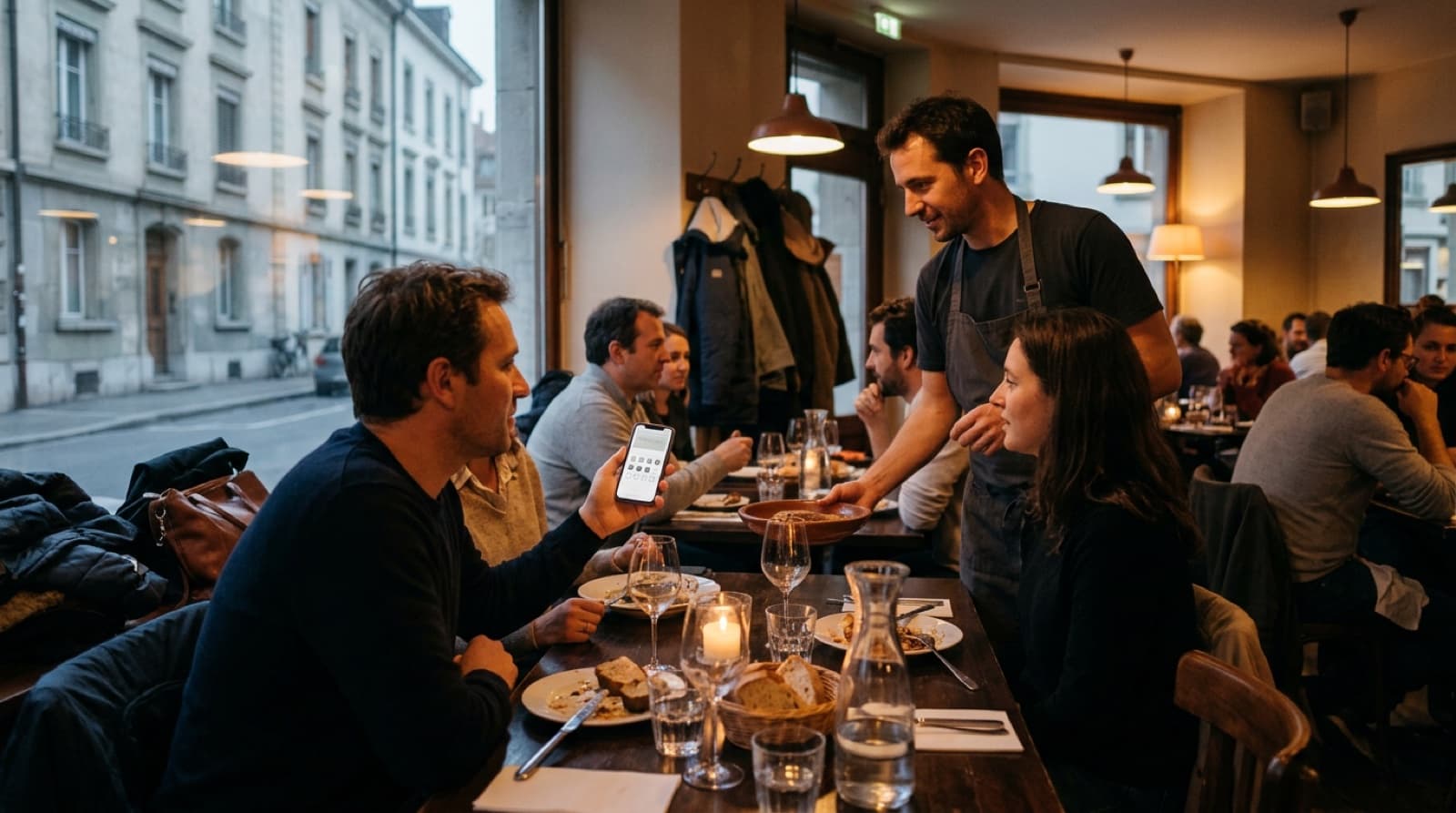
In the restaurant business, most of your revenue comes from regulars: bringing back an existing customer costs several times less than winning a new one. Yet most restaurants have no structured mechanic to encourage a return visit. Here are seven proven mechanics, from the timeless classic to the precisely targeted follow-up, each with the pitfall to avoid.
What are the 7 mechanics, from simplest to most refined?
1. The stamp card: the classic, properly calibrated
One stamp per visit (or per set menu), and a reward at the end. It has always worked, provided the target is set right. The pitfall: a target that is too far away (15 stamps) discourages customers before the first reward. Best practice: 8 to 10 stamps for a reward with real perceived value (a free main course, not a coffee).
2. The head start
Give 2 free stamps as soon as the card is activated. The effect is documented in consumer psychology (the "endowed progress" effect): a programme that has already been started is completed far more often than one starting from zero. Cost: nothing. Impact on completion rate: major.
3. Winning back inactive customers
This is the highest-return mechanic, and it is impossible with a paper card. A customer has not come back in 30 days? Send a targeted message: "Your favourite table is waiting for you, and so is your 7th stamp." Keep it for genuinely inactive customers: over-messaging your regulars has the opposite effect.
4. The birthday offer
A free dessert or aperitif during the customer's birthday week. Open and conversion rates are outstanding, and since nobody celebrates their birthday alone, every return brings extra covers. All you need is to ask for the date of birth (optional) at activation.
5. The off-peak bonus
Double stamps on Tuesday evenings or early in the week. You shift part of the demand towards quiet services instead of offering discounts at times when the dining room is full anyway.
6. Tiered rewards
A small reward at 5 stamps (a free coffee), a big one at 10 (a free main course). The first, close-at-hand tier keeps motivation going; the second builds the habit. It is the answer to customers dropping off halfway.
7. Regular status
Beyond stamps: recognise your best customers. A card that displays "Loyal member", a special touch on the 25th visit, a word from the chef. Recognition is a stronger loyalty lever than discounts, and it costs nothing in margin.
How do you launch your programme?
Launch a digital loyalty card in your restaurant
45 minFrom creating your account to scanning the first card: the complete set-up of a wallet loyalty programme, in about 45 minutes.
Define the mechanic(10 min)
Choose your basic rule: 1 stamp per visit, a reward at 8 to 10 stamps, 2 free stamps at activation. It should be easy to explain in one sentence, to your team and to your customers alike.
Customise your card(15 min)
Logo, colours, programme name, reward description: the card that will appear in Apple Wallet and Google Wallet should reflect your restaurant.
Display the activation QR code(10 min)
A table tent at the till, a window sticker, an insert in the menu: the QR code must be visible when the customer pays, because that is when activation happens naturally.
Train the team and launch(10 min)
Training comes down to one instruction: offer the card at every payment and scan the customer's QR code at every visit. Track activations during the first week and adjust what is said at the till.
Frequently asked questions
Which reward works best in a restaurant?+
A reward with high perceived value and low cost in margin: a free signature dish or a homemade dessert. Avoid percentage discounts, which cheapen your menu and erode your margin without building attachment.
One stamp per visit or per amount spent?+
Per visit, in most cases: it is instantly understood and keeps things quick at the till. Stamping by amount makes sense if your average bill varies widely (takeaway vs dine-in).
How do you stop the team forgetting to offer the card?+
Make it part of the payment routine ("Do you have your loyalty card?") and make scanning quicker than an ink stamp. If the tool slows down service, it will be abandoned: that is the number one criterion when choosing a solution.
How much does a digital loyalty programme cost for a restaurant?+
With Emuna: CHF 19.90 a month, no commitment, Apple and Google Wallet cards, unlimited scans and follow-up messages included. That is the equivalent of two or three coffees sold per month.
What are the key takeaways?
Start simple: stamps, a head start and win-back messages for inactive customers already cover most of the potential. Add the birthday offer and tiers once you have found your rhythm. And if you are starting from scratch, the complete guide to the digital loyalty card lays all the groundwork, from the mechanics to compliance with the revised Federal Act on Data Protection (FADP).